
ESFR vs. Standard Sprinklers: Selection and Installation for High-Pile Warehouse Storage
A comprehensive technical comparison of ESFR and standard sprinkler systems for high-pile warehouse storage, covering response mechanisms, performance data, installation constraints, and selection criteria.
King Panda Engineering Team
Product selection, submittal data and installation support for fire protection contractors and distributors
High-pile storage warehouses impose demanding requirements on fire protection systems. When goods are stacked above 6 meters, fire loads concentrate and spread rapidly, often overwhelming conventional sprinkler systems before they can achieve effective control. ESFR (Early Suppression Fast Response) sprinklers and standard sprinklers differ fundamentally in technical principles, response performance, and installation requirements—differences that directly affect warehouse fire safety ratings and construction costs.
| Criterion | ESFR Sprinklers | Standard Sprinklers |
|---|---|---|
| K-factor range | K14.0 to K25.2 | K5.6 to K8.0 |
| Response (RTI) | Below 50 | 80 to 350 |
| Head spacing | 3.6 to 4.0 m | 2.4 to 3.0 m |
| Maximum installation height | About 9 to 10 m | Above 12 m for some models |
| Design approach | 12-head ESFR demand at listing pressure | Density/area method with hose allowance |

Technical Principles and Response Mechanisms
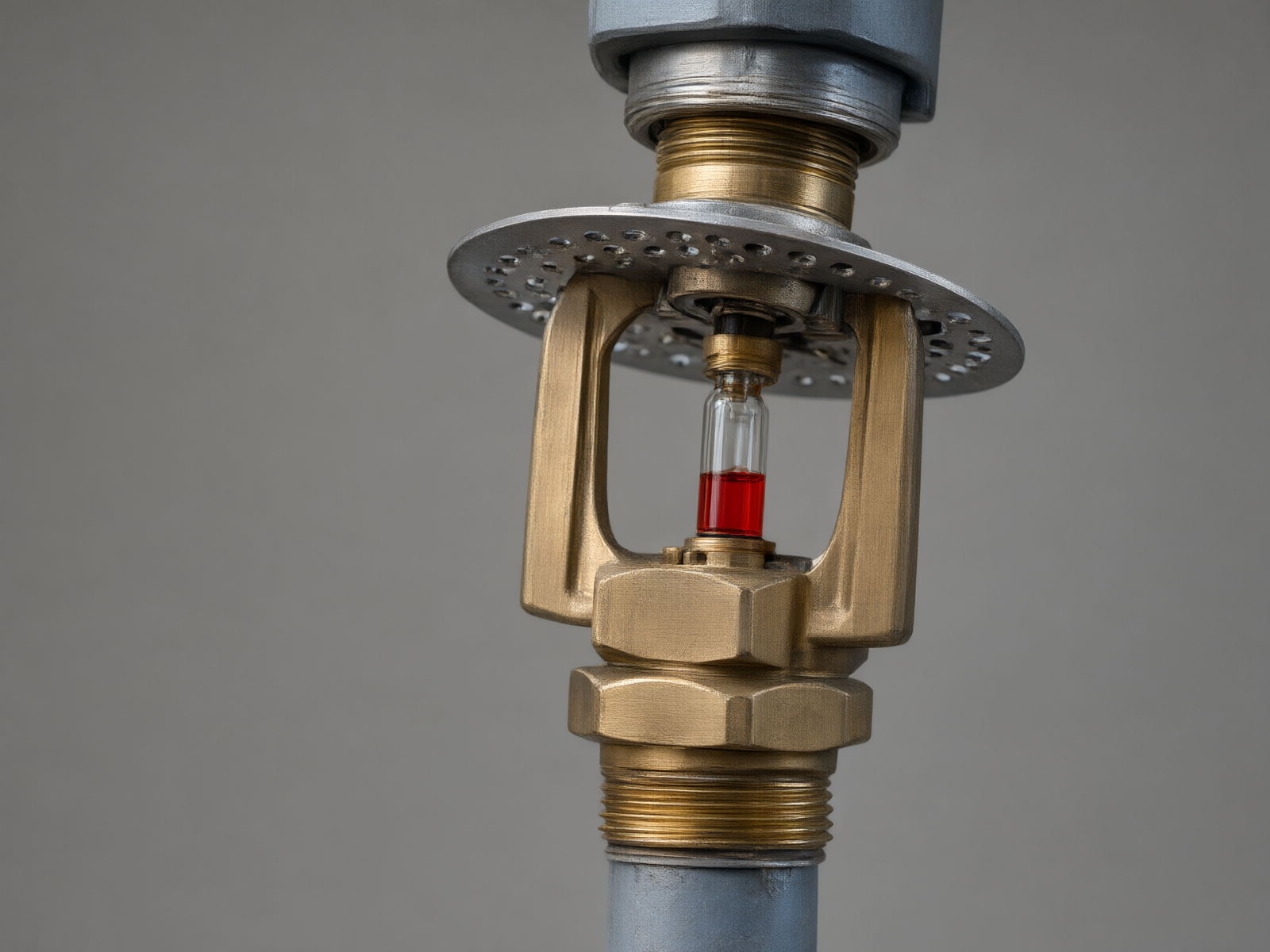
ESFR sprinklers are engineered for early suppression rather than fire control. Their defining characteristics combine a large discharge coefficient (K-factor typically ranging from K14.0 to K25.0) with fast-response thermal elements. When a fire develops, ESFR sprinklers activate more quickly and deliver higher water density across the fire zone, producing droplet distributions capable of penetrating flame plumes and suppressing combustion in its incipient stage.
Standard sprinklers (such as K5.6 or K8.0) operate on a fire control and cooling principle. With smaller discharge coefficients and response time indices (RTI) typically between 80 and 350, they rely on sustained water application after activation to reduce ambient temperatures and slow fire spread, buying time for occupant evacuation and firefighter intervention. This mechanism performs reliably in ordinary storage environments but often fails to achieve effective suppression in high-pile scenarios where rapid fire spread outpaces water delivery capacity.
Performance Comparison in High-Pile Scenarios
When warehouse stack heights exceed 6 meters, critical fire development parameters include heat release rate, flame height, and smoke layer temperature. ESFR sprinklers demonstrate advantages across three dimensions under these conditions.
First, response speed. ESFR sprinklers typically have RTI values below 50, with some models achieving under 30—far faster than the 80 to 350 range of standard sprinklers. This means that under identical fire conditions, ESFR sprinklers activate seconds to tens of seconds earlier, significantly reducing the fire’s free-burning development time.
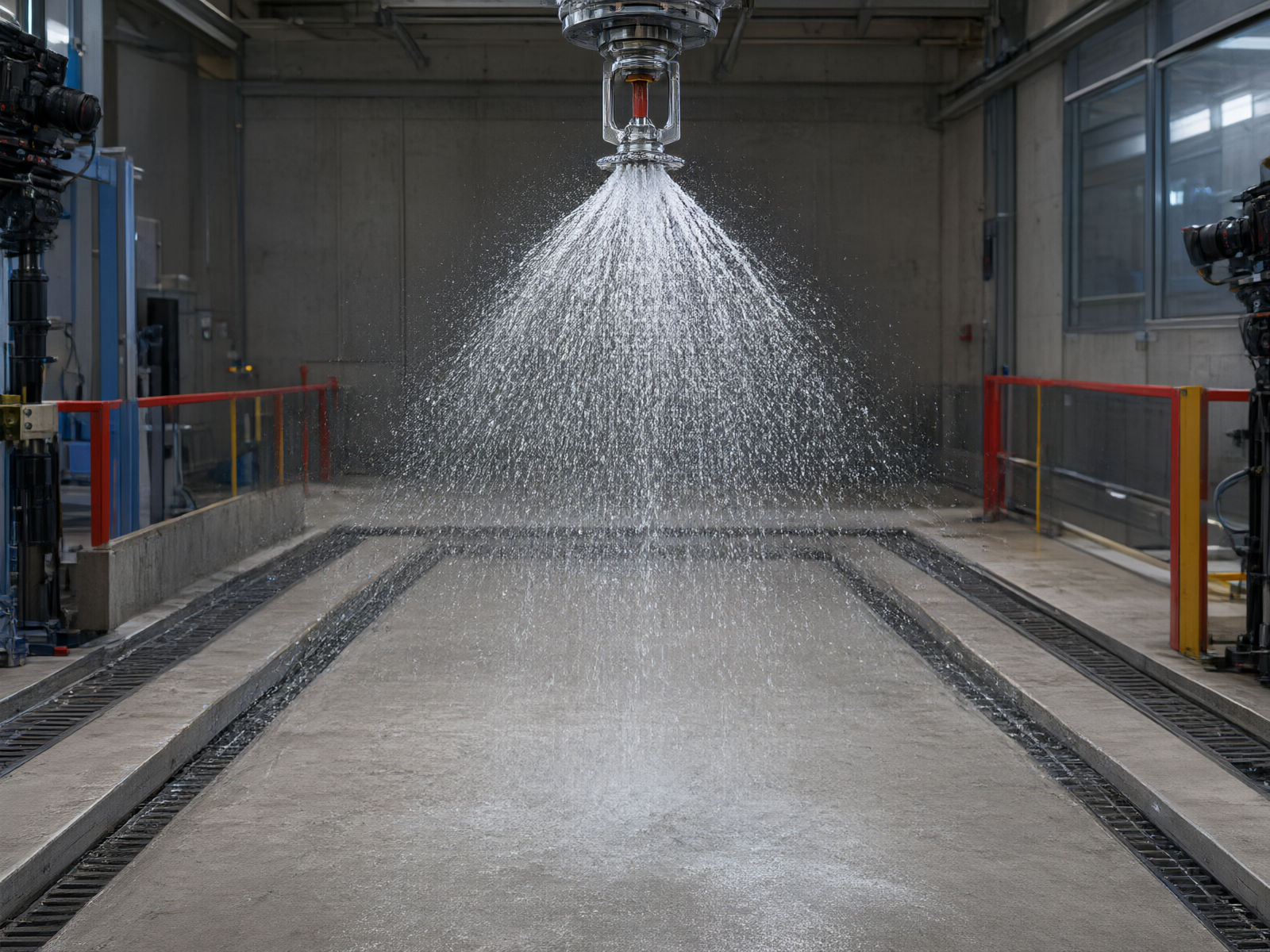
Second, water delivery density. Operating at 0.2 to 0.3 MPa working pressure, a single ESFR sprinkler delivers 200 to 400 liters per minute, achieving water densities exceeding 12 mm per minute per square meter across its coverage area. Standard sprinklers under the same pressure deliver only 80 to 150 liters per minute, with water densities struggling to exceed the 8 mm per minute per square meter threshold. In high-pile fires, when water density falls below critical values, droplets cannot penetrate flame plumes to reach burning surfaces, and control effectiveness deteriorates sharply.
Third, suppression capability. ESFR sprinklers produce larger droplets with higher momentum, enabling them to penetrate the intense thermal currents generated by high-pile fires and directly engage the fire source. Standard sprinklers generate finer droplets that readily evaporate in high-temperature environments, failing to reach the combustion zone.
Installation Requirements and Engineering Constraints
ESFR sprinkler installation requirements differ fundamentally from those of standard sprinklers across three key areas.
Sprinkler spacing. ESFR sprinklers typically cover larger protection areas, with single sprinklers covering 9 to 12 square meters and spacing relaxed to 3.6 to 4.0 meters. Standard sprinklers generally require spacing of 2.4 to 3.0 meters. The wider spacing of ESFR systems reduces sprinkler counts and piping quantities but demands higher installation positioning accuracy—sprinklers must be precisely centered over their protection areas.
Installation height. ESFR sprinkler maximum installation height is typically limited to 9 to 10 meters; beyond this height, droplet kinetic energy attenuates and suppression capability declines. Standard sprinklers have more permissive height limits, with some models suitable for spaces exceeding 12 meters. For warehouses with stack heights above 8 meters, ESFR applicability requires evaluation, or multi-tier arrangement schemes must be considered.
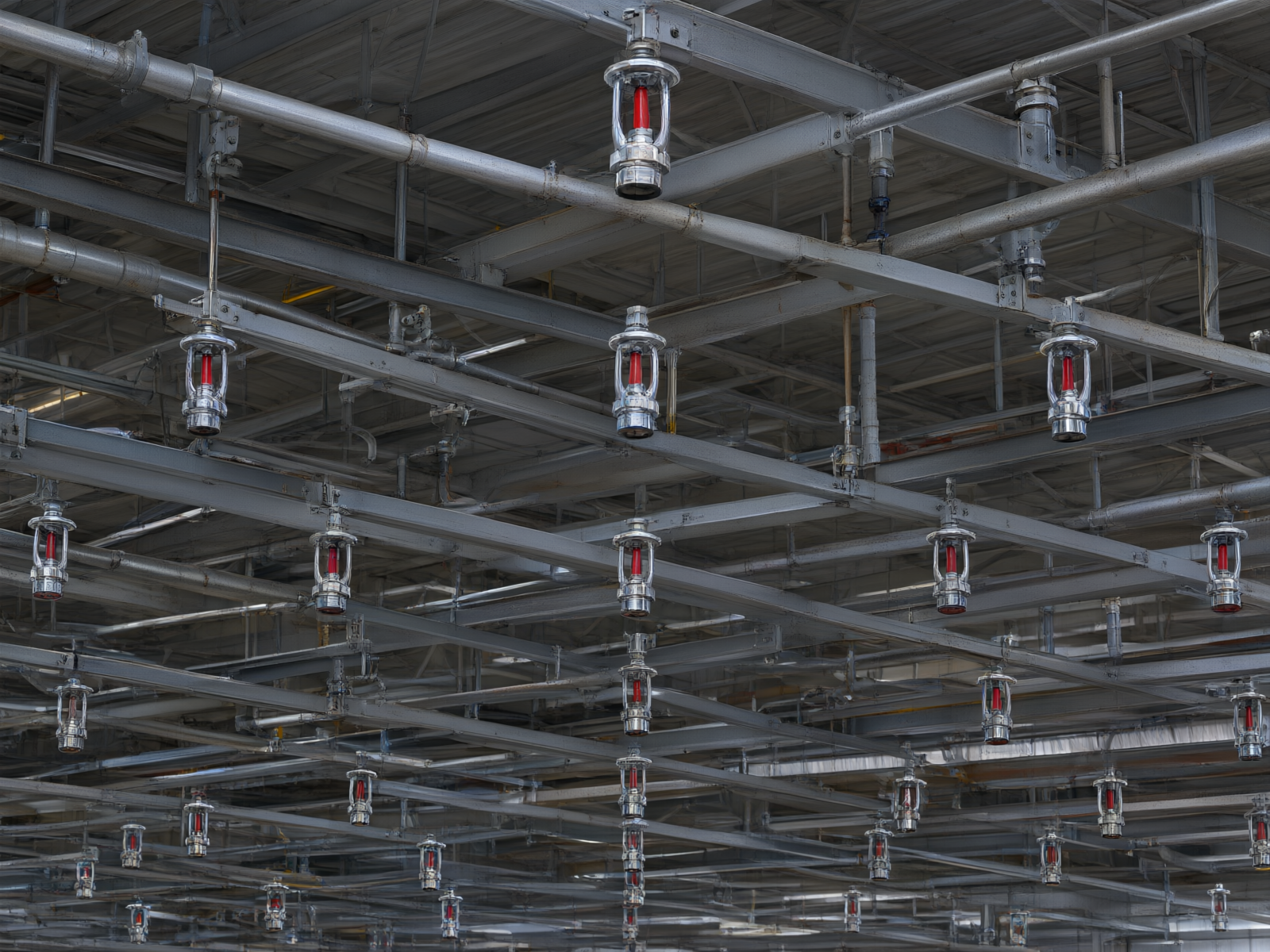
Water supply systems. The high-flow characteristics of ESFR sprinklers impose greater demands on supply piping networks. A single ESFR sprinkler consumes 200 to 400 liters per minute, and system design must calculate total flow based on simultaneous operation of 6 to 12 sprinklers at the most hydraulically remote point. Standard sprinkler systems have lower water demands, allowing smaller supply pipe diameters and fire water tank volumes.
Key Factors in Selection Decisions
Warehouse fire protection system selection requires comprehensive evaluation across four dimensions: stack height, commodity classification, building structure, and economic cost.
Stack height serves as the primary decision criterion. Below 4.5 meters, standard sprinkler systems typically satisfy protection requirements; between 4.5 and 9 meters, ESFR advantages become increasingly apparent; above 9 meters, selection must account for rack type and commodity fire hazard, with combined ESFR and in-rack sprinkler schemes deployed when necessary.
Commodity classification determines fire hazard severity. Plastics, rubber, and foam materials burn far more rapidly than ordinary carton-packaged goods, with heat release rates 3 to 5 times higher. In these high-fire-load scenarios, ESFR suppression capability proves decisive.
Regarding economic cost, ESFR sprinkler systems carry higher initial investment—individual sprinkler costs run 2 to 3 times those of standard sprinklers, with correspondingly higher water supply requirements. However, lifecycle cost analysis reveals that reduced sprinkler counts, piping quantities, and maintenance expenses, combined with potential fire loss reduction, typically recover the incremental investment within 3 to 5 years.

Conclusion
The selection between ESFR and standard sprinklers fundamentally represents a choice between suppression and control fire protection strategies. In high-pile warehouse scenarios, ESFR sprinklers achieve effective early-stage suppression through rapid response, high flow rates, and strong penetration capability, significantly reducing property loss risk. Standard sprinklers remain suitable for lower stack heights and smaller fire loads in conventional storage environments. Selection decisions should rest on technical and economic comparison of stack height, commodity classification, and water supply conditions, ensuring fire protection systems match warehouse risk profiles.
Standards and sources
- NFPA 13, Standard for the Installation of Sprinkler Systems
- UL 199, Automatic Sprinklers for Fire-Protection Service
- FM Global Property Loss Prevention Data Sheets
Figures in this guide follow the sprinkler discharge equation Q = K√P. Final selection must be verified against the governing listing and the authority having jurisdiction for the project.
Need Help With Fire Protection System Selection?
Our engineering team can provide technical consultation for your warehouse fire protection project.
Contact Our Team